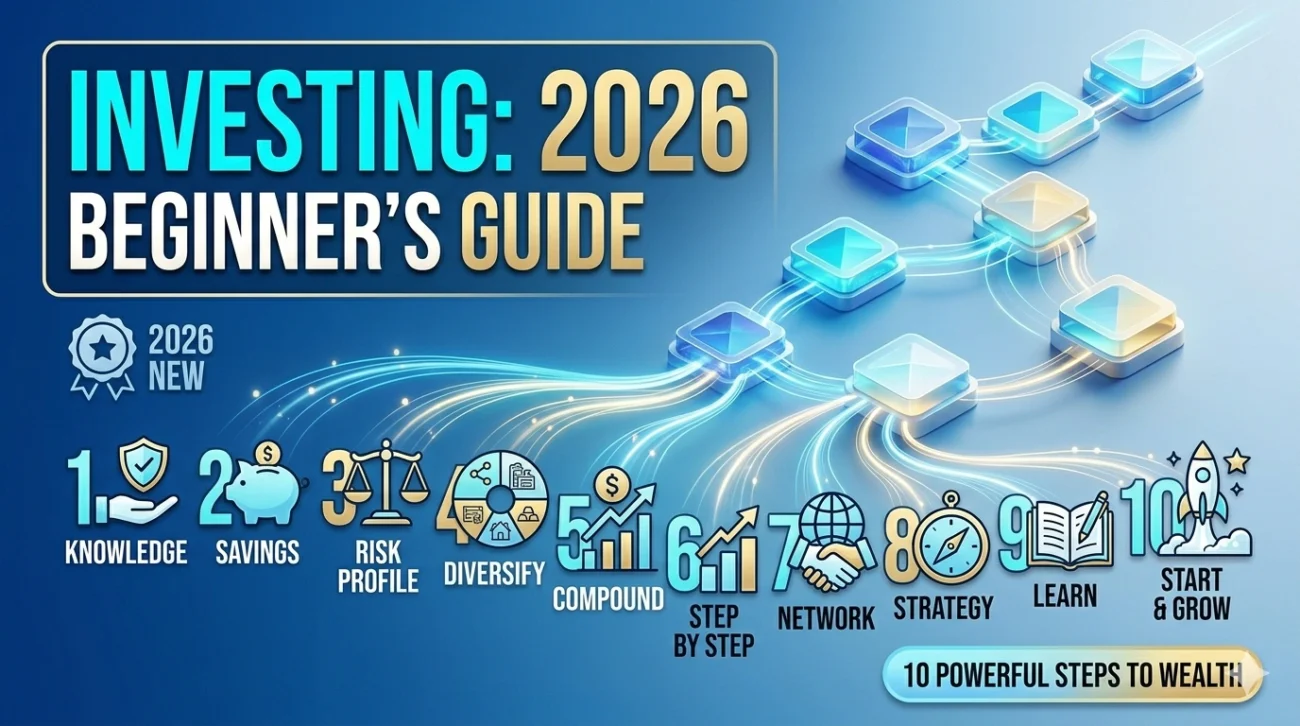
Investing in 2026 for beginners is one of the smartest decisions you can make to build long-term wealth. With easy access to index funds, ETFs, and online platforms, starting your investment journey has never been simpler. The key is to follow a clear, step-by-step strategy that minimizes risk and maximizes growth.
Why Investing in 2026 for Beginners Is the Best Decision
If you’re thinking about starting investing in 2026, you’re already ahead of most people. The biggest advantage you have isn’t money — it’s time and access to information.
With low-cost index funds, online brokerages, and global market access, building wealth has never been easier. Yet, most beginners delay investing due to fear, confusion, or overthinking.
The truth is simple:
The earlier you start investing, the easier it is to build wealth through compounding.
Step 1: Build a Strong Financial Foundation Before Investing in 2026
Before jumping into stocks or crypto, you need a base. Skipping this step is one of the biggest beginner investing mistakes.
Focus on:
- Emergency fund (3–6 months of expenses)
- No high-interest debt (credit cards, personal loans)
- Stable monthly income
Without this, even the best investment strategy can fail.
Step 2: Set Clear Goals When Investing in 2026 for Beginners
Investing without a goal is like driving without a destination.
Break your goals into:
- Short-term (1–3 years): Travel, gadgets, small purchases
- Medium-term (3–7 years): House down payment, business
- Long-term (10+ years): Retirement, financial freedom
Each goal determines your investment strategy and risk level.
Step 3: Understand Risk vs Return in Investing in 2026
Every investment comes with risk. The key is to match risk with your time horizon.
Here’s a simple breakdown:
| Investment Type | Risk Level | Expected Returns | Best For |
|---|---|---|---|
| Savings Account | Very Low | 2–4% | Emergency funds |
| Bonds / Debt Funds | Low | 4–7% | Stability |
| Index Funds / ETFs | Medium | 8–12% | Long-term wealth |
| Individual Stocks | High | 10–15%+ | Experienced investors |
| Crypto Assets | Very High | Highly volatile | Speculative investing |
👉 Beginners in 2026 should prioritize low-cost index funds and ETFs over risky assets.
Step 4: Start Index Fund Investing in 2026 for Beginners
If I started investing in 2026, I would begin with index fund investing.
Why?
- Low fees
- Diversification
- Proven long-term returns
- No need to pick individual stocks
Instead of trying to beat the market, you simply own the market.
This strategy has consistently outperformed most active investors over time.
Step 5: Use Dollar-Cost Averaging When Investing in 2026
One of the best investment strategies for beginners is Dollar-Cost Averaging (DCA).
Instead of investing a lump sum, you invest regularly (weekly/monthly).
Benefits:
- Reduces timing risk
- Builds discipline
- Smoothens market volatility
👉 Example: Investing $500 every month into an index fund.
Step 6: Diversify Your Portfolio in Investing in 2026
Diversification reduces risk without sacrificing returns.
A simple beginner portfolio in 2026 could look like:
| Asset Class | Allocation |
|---|---|
| Index Funds (Equity) | 60% |
| Bonds / Debt | 20% |
| International ETFs | 10% |
| Gold / Alternatives | 10% |
This ensures your portfolio is balanced across markets and economic conditions.
Step 7: Avoid Mistakes in Investing in 2026 for Beginners
Most people don’t fail because of lack of knowledge — they fail due to behavior.
Avoid these mistakes:
- Trying to time the market
- Investing based on social media hype
- Panic selling during market crashes
- Over-investing in risky assets like crypto
- Ignoring long-term strategy
Consistency beats intelligence in investing.
Step 8: Focus on Long-Term Wealth While Investing in 2026
Wealth is built slowly. The biggest mistake beginners make is expecting quick profits.
The real magic happens through compounding.
👉 Example:
- Invest $500/month at 10% return
- After 20 years → ~$380,000
- After 30 years → ~$1,000,000+
Time in the market beats timing the market — every single time.
Step 9: Automate Your Investing in 2026 Strategy
Automation is the easiest way to stay consistent.
- Set up automatic transfers to your investment account
- Invest on a fixed date every month
- Increase contributions as income grows
This removes emotion and ensures discipline.
Step 10: Improve Your Investing in 2026 Plan Continuously
The best investors are lifelong learners.
In 2026, you have access to:
- Free financial education online
- Investment platforms with analytics
- Global market insights
Make it a habit to:
- Review your portfolio annually
- Rebalance allocations
- Learn from market trends
The Ideal Beginner Investment Plan for 2026 (Quick Summary Table)
| Step | Action |
|---|---|
| 1 | Build emergency fund |
| 2 | Clear high-interest debt |
| 3 | Set financial goals |
| 4 | Start with index funds |
| 5 | Use dollar-cost averaging |
| 6 | Diversify portfolio |
| 7 | Avoid common mistakes |
| 8 | Stay invested long-term |
| 9 | Automate investments |
| 10 | Review and improve |
Conclusion: Start Now, Not Later
If I were starting investing in 2026, I wouldn’t wait for the “perfect time.” I would start small, stay consistent, and focus on long-term growth.
Because in investing, starting early is far more powerful than starting big.
The biggest risk isn’t losing money — it’s never starting at all.
FAQs: Starting Investing in 2026
Q1. How much money do I need to start investing in 2026?
You can start with as little as $50–$100 using index funds or ETFs.
Q2. What is the safest investment for beginners?
Index funds and diversified ETFs are considered the safest long-term options.
Q3. Should I invest or save first?
Build an emergency fund first, then start investing.
Q4. Is 2026 a good time to invest?
Yes. The best time to invest is always now, regardless of market conditions.
Q5. How often should I invest?
Monthly investing (DCA) is ideal for beginners.
About The Author
